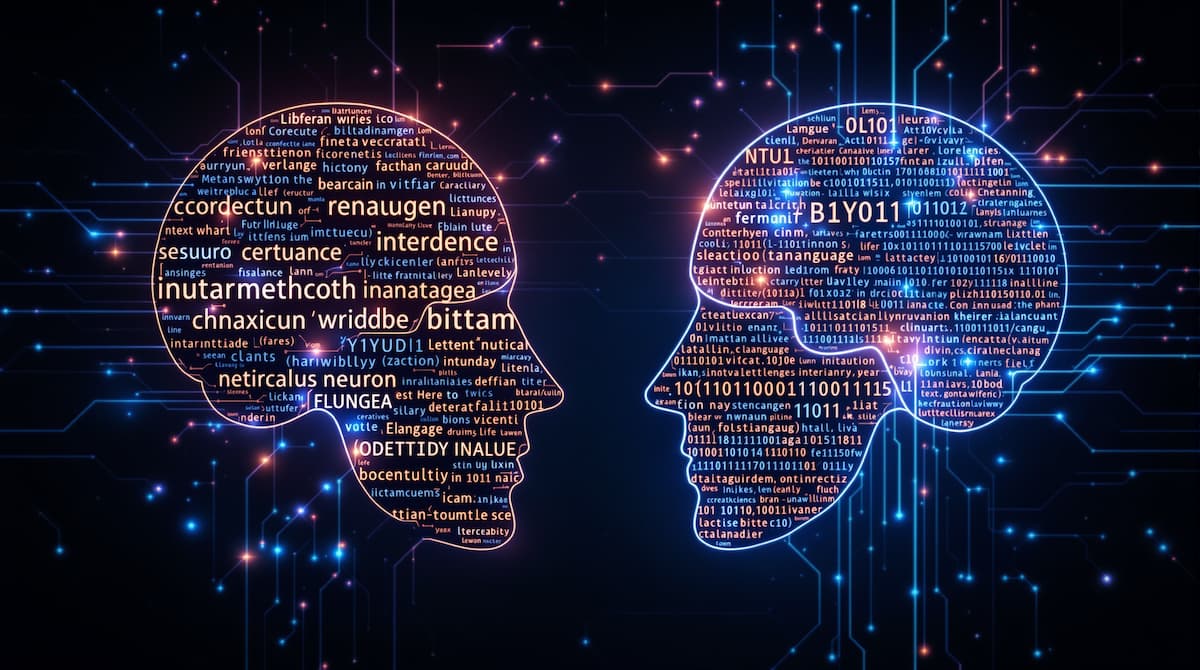
Language AI has evolved from simple word counting to sophisticated models like transformers, aiming to preserve meaning through numerical representation, with future breakthroughs poised to enhance reasoning and contextual understanding.
One of the most interesting things about artificial intelligence is that, despite all the hype, the best ideas are often the oldest. Language AI is a perfect example. The latest models, with their billions of parameters and dizzying capabilities, trace their roots back to something incredibly simple: counting words.
The First Step, Just Count Words
The earliest attempts at making computers understand language were brutally straightforward. The "bag-of-words" approach, for instance, ignored everything except whether a word was present. If a sentence contained the word "cat," it got a checkmark. If not, it didn’t. No understanding of
The LLM T.E.S.T. Framework is a structured approach for evaluating Large Language Models (LLMs) across multiple dimensions. It determines an AI's true capabilities, reliability, and scalability for real-world applications, distinguishing truly useful models from those that merely appear intelligent.
Why Testing LLMs Matters
Large Language Models (LLMs) have become the rockstars of artificial intelligence, impressing users with their ability to answer complex questions, generate creative content, and even write code. But behind the hype, a crucial question remains: how do we measure an AI's true intelligence, reliability, and usefulness?
Not all LLMs are created equal. Some can reason logically and create stunningly original content, while others confidently spout nonsense or fall apart under pressure. Without a standardized way to evaluate these models, users are left guessing which AI is truly capable and which is just an overconfident text
Explore the critical flaws in current AI language model benchmarks, the impact of overfitting, and emerging techniques like grokking that promise to improve generalization and reasoning capabilities in next-generation AI systems.
1. Introduction
1.1. Overview of Language Model Benchmarks and Their Importance
Language models have become the cornerstone of numerous applications, from natural language processing to complex decision-making systems. As these models grow in sophistication and capability, the need for reliable benchmarks to evaluate their performance has become increasingly critical.
Benchmarks serve as standardized tests that provide a measurable way to assess the effectiveness of language models across various tasks. They play a pivotal role in guiding the development of models, setting industry standards, and enabling comparisons across different architectures.
The importance of these benchmarks cannot be overstated. They
Discover a prompt engineering framework that leverages large language models (LLMs) to generate effective heuristics dynamically, enhancing decision-making and problem-solving capabilities across various domains.
What Are Heuristics and What Are They Used For
Heuristics are mental shortcuts or rules of thumb that people use to make decisions, solve problems, or make judgments quickly and efficiently. They are often based on experience, intuition, or common sense, and they allow individuals to simplify complex situations and reach conclusions without extensive deliberation or analysis.
The Problem with Traditional Heuristics: Traditional heuristics are often manually curated—a time-consuming, labour-intensive process. They also tend to be rigid and less adaptable to new problems or variations within a problem domain.
Discover how the Emotional Intelligence (EI) Graph provides a structured approach to developing and regulating emotional intelligence skills. Learn about EI Clusters, Cognitive Chains, and Nodes, and how they work together to support personal growth and well-being.
Introduction to the EI Graph for LLMs
To create humanlike and empathetic interactions when dealing with conversational AI, language models, AI agents, and chatbots must recognize, understand, and respond to emotional cues. The Emotional Intelligence (EI) Graph for LLMs is a structured framework designed to address this need by representing the emotional prompting processes in a systematic and modular manner.
The Emotional Intelligence (EI) Graph for LLMs is a structured framework designed to enable large language models, AI agents, and chatbots to recognize, understand, and respond to emotional cues in user interactions. The EI Graph for LLMs is composed of several EI Clusters, each focusing on a specific aspect of emotional intelligence that is relevant and applicable to conversational AI.
Within each EI Cluster for LLMs, there are Cognitive Chains that provide a sequential and logical progression of steps to guide LLMs, AI agents, and chatbots in processing and responding to emotional cues. These Cognitive Chains are designed to break down the emotional understanding and response generation process into manageable and interconnected tasks.
The individual elements within each Cognitive Chain for LLMs are called Nodes. Nodes represent specific functions, algorithms, or prompt templates that LLMs, AI agents, and chatbots use to recognize, interpret, and generate emotionally appropriate responses. Each Node is carefully designed to handle a specific aspect of emotional processing, such as sentiment analysis, empathy generation, or emotional tone modulation.
By organizing the emotional prompting processes into this hierarchical structure of EI Graph for LLMs, EI Clusters for LLMs, Cognitive Chains for LLMs, and Nodes for LLMs, we create a systematic and modular approach to enabling emotionally intelligent interactions in conversational AI.
LLMs, AI agents, and chatbots like ChatGPT and Claude can utilize this structured approach to process user inputs, recognize emotional cues, and generate responses that are emotionally appropriate and empathetic. The EI Graph for LLMs serves as a guide for these AI systems to navigate the complexities of human emotions and provide more humanlike and emotionally intelligent conversations.
The development of the EI Graph for LLMs involves a collaborative effort between AI researchers, psychologists, and language experts to ensure that the emotional prompting processes are grounded in psychological theories of emotional intelligence while being adapted to the unique capabilities and constraints of language models and conversational AI.
Regular updates and refinements to the EI Graph for LLMs based on user feedback, advancements in emotional intelligence research, and improvements in language modelling techniques will ensure that the emotional prompting processes remain effective, relevant, and aligned with the evolving landscape of conversational AI.
Terminology:
Emotional Intelligence (EI) Graph for LLMs: A structured framework that represents the emotional prompting processes designed to enable LLMs, AI agents, and chatbots to recognize, understand, and respond to emotional cues in user interactions.
EI Clusters for LLMs: The main categories or domains of emotional intelligence capabilities within the EI Graph for LLMs. These clusters are based on specific aspects of emotional intelligence that are relevant and applicable to language models and conversational AI.
Cognitive Chains for LLMs: The sequential steps or processes within each EI Cluster that guide LLMs, AI agents, and chatbots in processing and responding to emotional cues in user interactions. Cognitive Chains provide a logical progression of tasks and prompts to enable emotionally intelligent responses.
Nodes for LLMs: The individual components or elements within a Cognitive Chain for LLMs. Nodes represent specific functions, algorithms, or prompt templates that LLMs, AI agents, and chatbots use to recognize, interpret, and generate emotionally appropriate responses.
Developing EI Graphs
Developing an effective structure process for creating EI Graphs is crucial to ensure that the emotional prompting processes are comprehensive, well-organized, and aligned with established emotional intelligence models. Here's a proposed structure process for developing EI Graphs:
💡
These steps can be greatly assisted by AI, however depending on the degree of reliance, purpose and the need for emotional sensitivity these should be tested, reviewed and measured against professional networks and models.
Discover how prompt engineering techniques can help language models overcome memory limitations and deliver more accurate, context-rich responses.
Large Language Models (LLMs) have taken the world by storm, capable of generating human-quality text, translating languages, and even writing different kinds of creative content. But beneath this impressive facade lies a hidden secret: LLMs can struggle to access information randomly within their vast "memory" stores. This limitation can hinder their performance in tasks that require specific detail retrieval or a deeper understanding of factual relationships.
💡
The more studies I read on the shortcomings of LLMs the more I am convinced of the need for prompt engineering.
Here's where prompt engineering provides the edge. By crafting effective prompts,
Reasoners “thinking” before responding, improving logic and problem-solving without larger models. They excel in structured tasks but struggle with creativity. A $30 experiment showed this approach could make AI smaller, cheaper, and more efficient, reshaping the future of AI development.
There’s been a lot of noise lately about AI replacing programmers.
Apps like Cursor, Windsurf, Loveable, Cline, Aider, Bolt, and others have sparked heated debates, often painted in stark black-and-white terms: either AI will replace programmers, or it won’t.
But that framing misses the point. The
Discover how carefully chosen prompt keywords enhance the effectiveness of language models. Learn how to craft precise prompts to improve the reliability and usefulness of AI responses.