Skip to Content
Sunil Ramlochan

Sunil Ramlochan

Bridging AI theory with Practice and Implementation

524 posts

Posts by Sunil Ramlochan

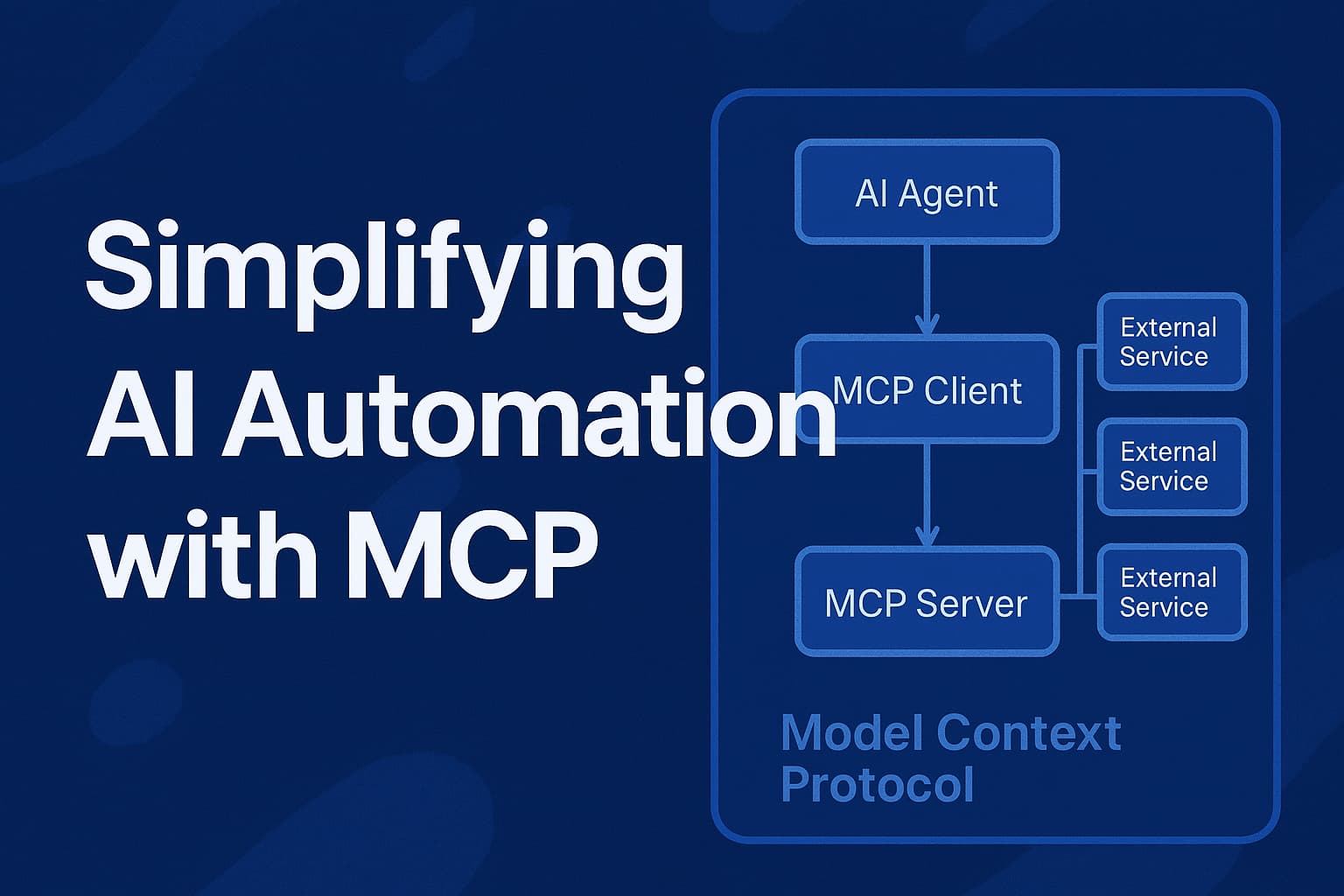
MCP - The Secret Sauce of AI Agents and Automation

Meet MCP—the Model Context Protocol—your AI’s new best friend. It’s not magic, just better architecture. Here’s a breakdown of what MCP really is (minus the hype), how it works, and why it’s about to become the foundation of AI automation.

MCP - The Secret Sauce of AI Agents and Automation

What Is MCP and Why Should You Care?

If you’ve ever tried wiring up an AI agent to send an email, update a database, and maybe book your dentist appointment (yes, even that), you’ve probably been blindsided by the horror that is manual configuration. Each integration is a little snowflake—quirky, picky, and requiring hours of careful setup.

Enter Model Context Protocol (MCP), your AI agent’s universal translator.

MCP is not a product. It's not an app. It's not even particularly shiny. It's a standardized protocol that tells your AI how to talk to

MCP - The Secret Sauce of AI Agents and Automation Read more

The Dark Side of GPT-4o Image Generation - When Hype Meets Reality

Explore the flaws and frustrations of the GPT-4o image generator, from slow generation times to censorship limits and more. Discover the hidden challenges behind the tech hype.

The Dark Side of GPT-4o Image Generation - When Hype Meets Reality

We've all seen the memes—the delightful, dreamy creations in Studio Ghibli style that flood our feeds, courtesy of the latest GPT-4o image generator. It's a tech marvel that seems to promise a future of endless creativity. But, let's take a step back and look beyond the memes, shall we? As much as the hype is real, so too are the cracks starting to show. As we dive deeper into the tool, its limitations quickly become apparent. Here's a rundown of the real struggles that users are encountering. Spoiler alert: It's not all fairy

The Dark Side of GPT-4o Image Generation - When Hype Meets Reality Read more

The Strange Loops of Generative AI

They (AI) weren’t trained to find truth; they were trained to continue a pattern. It’s like giving someone half a crossword puzzle and asking them to finish it—not by solving it, but by guessing what kind of answers usually go there.

The Strange Loops of Generative AI

There’s something inherently human about wanting to make things that make things.

It’s why we build factories, write programs, or start companies. But when the things we build start writing poems, painting pictures, and generating music—well, that’s when it gets interesting. That’s generative AI.

Most people, when they hear “AI,” still picture something out of science fiction: a robot with glowing eyes or maybe the calm voice of a spaceship computer. But AI in the real world doesn’t look like that. It looks more like autocomplete on steroids. It writes essays, draws pictures, composes

The Strange Loops of Generative AI Read more

Stop Selling AI Tools: Start Solving Business Problems - The Only Play That Wins in 2025

Right now chatbots are cheaper than fast food, selling AI in 2025 is a race to the bottom. Discover why solving real business problems, not hawking tools, is the only way to close six-figure deals in a saturated market.

Stop Selling AI Tools: Start Solving Business Problems - The Only Play That Wins in 2025

AI in 2025 - Selling Air in a Tornado

Welcome to 2025, where trying to sell a basic AI chatbot is like hawking bottled air in the middle of a category-five tornado—chaotic, irrelevant, and more than a little embarrassing. Everyone already has the air. It's swirling around them at 120 miles an hour. They don’t need yours. And they definitely don’t want to pay for it.

Let’s stop pretending that slapping a “ChatGPT-powered” label on a form flow makes it special. It doesn’t. The market’s oversaturated. Businesses have been pitched the same

Stop Selling AI Tools: Start Solving Business Problems - The Only Play That Wins in 2025 Read more

The Last Year of Human Supremacy - How to Think When AI Does Everything Else

2025 is shaping up to be the last year humans can outperform AI in software engineering. As AI eats up one-dimensional skills, our only hope lies in mastering agency, leverage, and ruthless simplification. Here's how to survive (and thrive) when thinking becomes the only high-value skill left.

The Last Year of Human Supremacy - How to Think When AI Does Everything Else

The Year AI Dethroned the Coder

Remember when Deep Blue beat Kasparov in 1997 and we all thought, “Well, at least it’s just chess”? Then AlphaGo did Go dirty in 2016, and we muttered, “But programming is safe, right?”

Yeah, about that.

Kevin Wang, CPO of OpenAI, says 2025 is the final year humans will beat AI at software engineering. That’s right, your ability to stack divs and curse at compilers is officially on borrowed time.

TL;DR: If your job involves being the best at a single thing—writing code, designing ads, churning out blog posts (gulp
The Last Year of Human Supremacy - How to Think When AI Does Everything Else Read more

AI Is Eating StackOverflow’s Lunch — And That’s Okay

Are junior devs getting dumber with AI, or are they just learning smarter? Let's dissect the old-school coding nostalgia and explore why AI-assisted programming might be creating better, not worse, developers.

AI Is Eating StackOverflow’s Lunch — And That’s Okay
This post is a response to the article Young Coders Are Using AI for Everything, Giving ‘Blank Stares’ When Asked How Programs Actually Work, originally published by Futurism and based on a blog post by developer Namanyay Goel.
Young Coders Are Using AI for Everything, Giving “Blank Stares” When Asked How Programs Actually Work
Young programmers “can’t actually program” because they’re too reliant on AI models, writes developer Namanyay Goel.

In that piece, Goel argues that today’s junior developers are too reliant on AI tools like ChatGPT and GitHub Copilot — producing functional code without

AI Is Eating StackOverflow’s Lunch — And That’s Okay Read more